
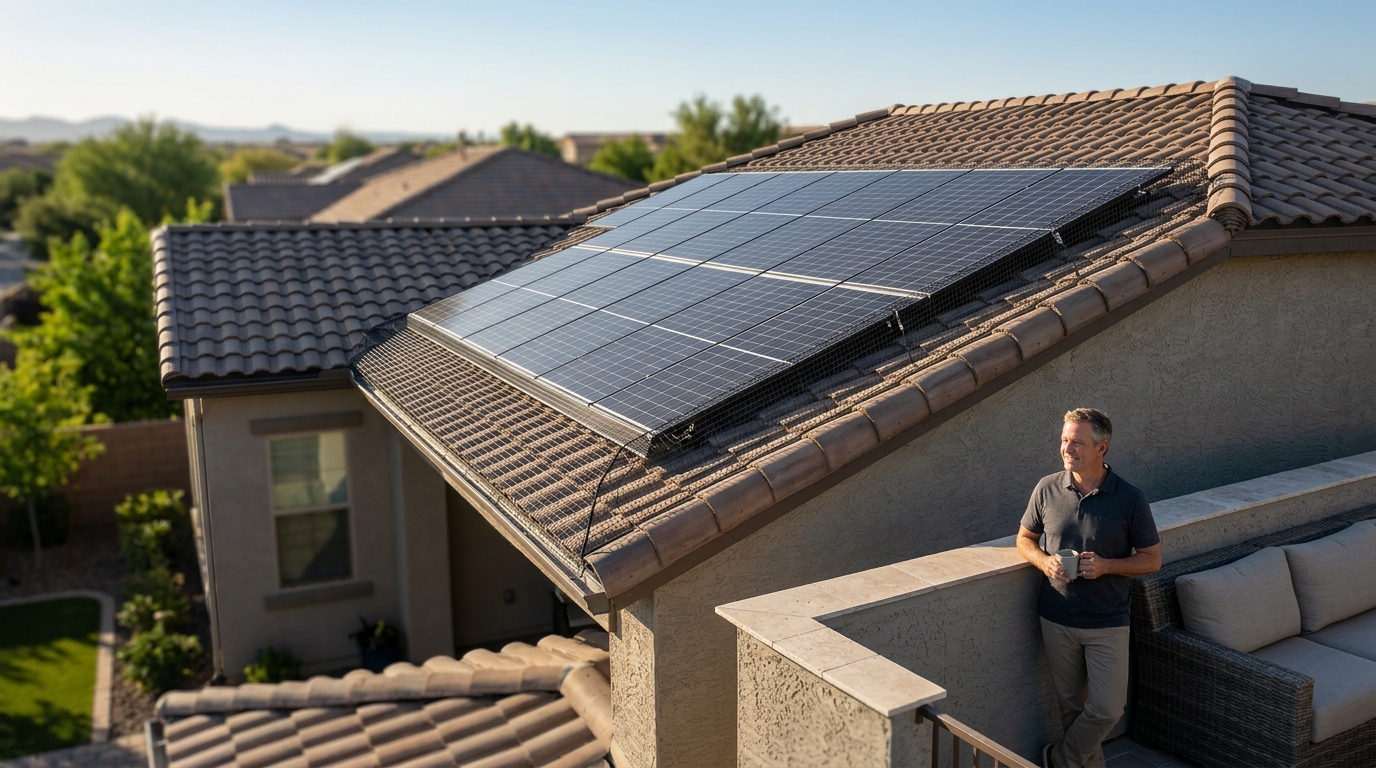
Solar panel exclusion systems keep pigeons from nesting underneath by creating physical barriers that block access to the space beneath the panels. These barriers, such as netting, mesh, or sealed edges, prevent birds from entering the area while allowing sunlight and airflow to reach the panels. By eliminating the nesting site, the system stops the root cause of the problem rather than just removing existing birds. Professional Pigeon Control in Peoria, AZ, specializes in installing these durable, humane solutions to protect your solar investment.
The Mechanics of Physical Barriers
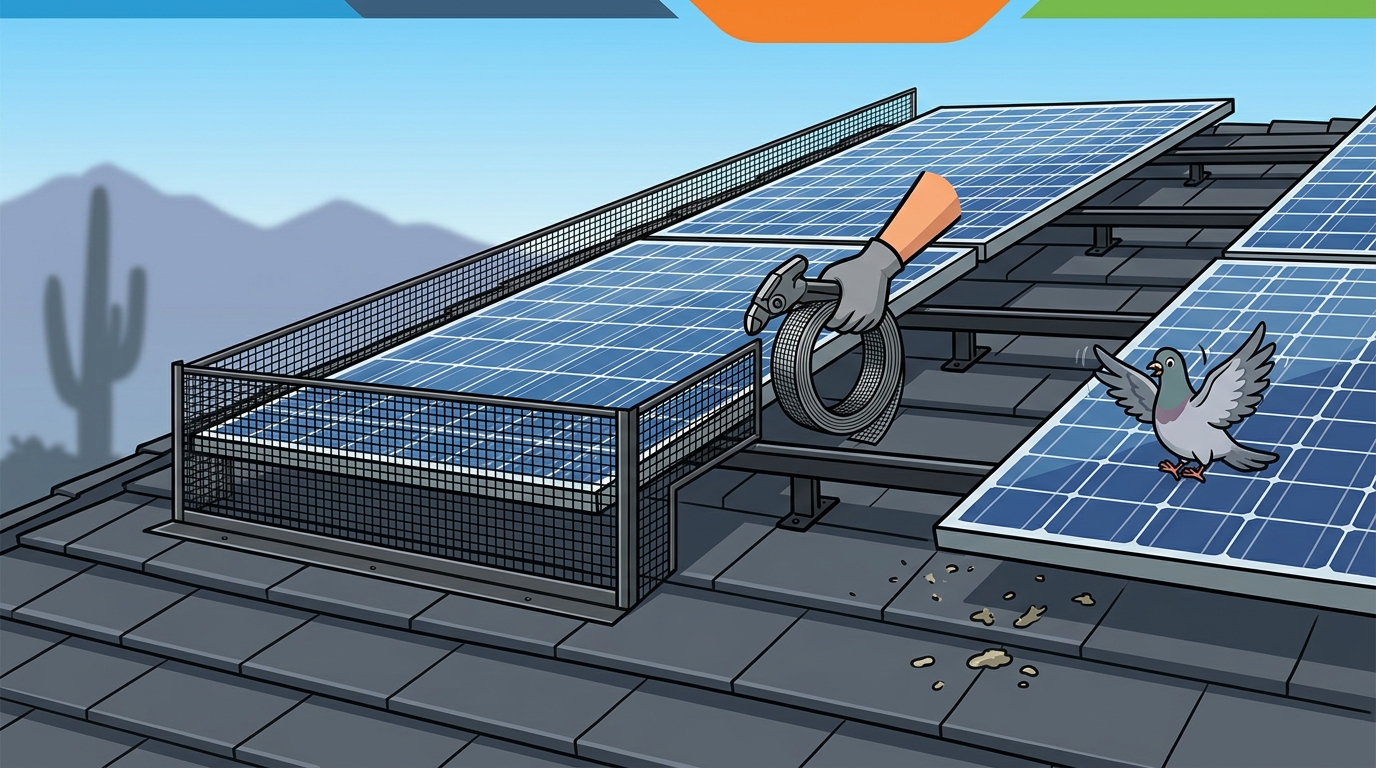
Solar panel exclusion is the process of installing physical barriers around the perimeter of solar panels to prevent birds from accessing the space underneath. The most common method involves using high-tensile strength netting or mesh that is anchored to the roof structure or the panel frames. This material is designed to be strong enough to withstand wind and weather while being fine enough to stop pigeons from squeezing through. The key to effectiveness is ensuring there are no gaps larger than a few inches, as pigeons are surprisingly flexible and can compress their bodies to fit through small openings.
When a barrier is installed correctly, it creates a sealed environment that denies pigeons the flat, protected surface they need to build nests. Pigeons prefer to nest in enclosed or semi-enclosed spaces where they feel safe from predators. By blocking the entry points, the exclusion system makes the area under the panels uninhabitable. This approach is superior to temporary deterrents because it addresses the structural vulnerability of the roof and panel setup. For homeowners in the Greater Phoenix area, where solar energy is a significant part of the energy mix, this physical prevention is critical for maintaining panel efficiency.
Why Pigeons Target Solar Panels
Pigeons are attracted to the space under solar panels for several specific reasons. First, the panels provide shade and protection from the intense Arizona sun, creating a comfortable microclimate for nesting. Second, the flat surface of the panels and the roof structure offer a stable platform for building nests. Third, the area is often elevated, which keeps the birds away from ground-level predators. Understanding these motivations helps explain why simple visual deterrents often fail. Pigeons are persistent and will return to a location if it meets their basic needs for safety and shelter.
Once a pair of pigeons establishes a nest under a solar panel, they can produce multiple clutches of eggs per year. This rapid reproduction leads to a growing population that can quickly become a significant nuisance. The droppings and nesting materials can accumulate, leading to unsanitary conditions and potential damage to the panels. By understanding the behavioral drivers, property owners can appreciate the necessity of a comprehensive exclusion system. Professional Pigeon Control assesses these behavioral patterns during the initial inspection to design a barrier that specifically targets the entry points pigeons are most likely to use.
Types of Exclusion Materials
There are several types of materials used in solar panel exclusion systems, each with its own advantages. Netting is the most popular choice because it is flexible and can be installed around irregular shapes. It is typically made from polyethylene or polyester and is UV-resistant to withstand long-term exposure to sunlight. Mesh is another option, often used for smaller gaps or specific entry points. Both materials are designed to be durable and long-lasting, providing protection for many years without degradation. The choice of material depends on the specific layout of the solar array and the roof structure.
In addition to netting and mesh, some systems use solid panels or boards to block access from specific sides. This is often used in combination with netting to create a multi-layered defense. The goal is to create a seamless barrier that leaves no gaps for birds to exploit. Professional installation is crucial because improper installation can leave gaps that render the system ineffective. A skilled technician will ensure that all edges are sealed and that the material is tensioned correctly to prevent sagging or tearing over time.
Impact on Solar Panel Efficiency
One of the primary benefits of solar panel exclusion is the preservation of panel efficiency. Pigeon droppings and nesting materials can block sunlight from reaching the photovoltaic cells, reducing the amount of energy the panels can generate. A single nest can cover a significant portion of a panel, leading to a noticeable drop in power output. By preventing nesting, the exclusion system ensures that the panels remain clean and unobstructed. This not only protects the energy production but also reduces the need for frequent and costly cleaning services.
Furthermore, the accumulation of droppings can cause long-term damage to the panel surface. The acidic nature of bird droppings can etch into the glass or the protective coating, permanently reducing the panel's ability to convert sunlight into electricity. Over time, this damage can significantly shorten the lifespan of the solar array. By implementing an exclusion system, property owners can protect their investment and ensure that their solar panels continue to perform at peak efficiency for their entire operational life. This proactive approach is far more cost-effective than dealing with the consequences of an infestation.
Installation Process and Considerations
The installation of a solar panel exclusion system is a precise process that requires careful planning. It typically begins with a thorough inspection of the roof and the solar array to identify all potential entry points. The technician will then measure the area and select the appropriate materials. The installation involves securing the netting or mesh to the roof structure or the panel frames, ensuring that there are no gaps. This process must be done carefully to avoid damaging the panels or the roof. It is important to work with a professional who has experience with solar installations to ensure that the system is installed correctly and safely.
After installation, the system should be inspected regularly to ensure that it remains intact. Weather conditions, such as high winds or heavy rain, can cause the material to shift or tear over time. Regular maintenance helps to identify and address any issues before they become a problem. Professional Pigeon Control offers ongoing maintenance services to ensure that your exclusion system continues to provide effective protection. By combining a robust initial installation with regular maintenance, property owners can enjoy long-term peace of mind knowing that their solar panels are protected from pigeon nesting.
Key Takeaways
- Solar panel exclusion is the process of installing physical barriers to prevent birds from accessing the space under panels.
- Netting and mesh are the most common materials used, chosen for their durability and UV resistance.
- Pigeons are attracted to solar panels for shade, stability, and protection from predators.
- Preventing nesting helps maintain solar panel efficiency by keeping the surface clean and unobstructed.
- Professional installation is essential to ensure that the barrier is seamless and effective.
- Regular maintenance is required to ensure the long-term integrity of the exclusion system.
Frequently Asked Questions
How long does a solar panel exclusion system last?
With proper installation and maintenance, a solar panel exclusion system can last for many years. The materials used are typically UV-resistant and designed to withstand outdoor conditions. Regular inspections can help identify any wear and tear, allowing for timely repairs to extend the system's lifespan.
Will an exclusion system affect my solar panel warranty?
Generally, no. Most solar panel warranties do not cover damage caused by bird droppings or nesting. Installing an exclusion system is a preventive measure that protects your investment. It is always a good idea to check with your solar provider to ensure that the installation method does not violate any specific warranty terms.
Can I install a solar panel exclusion system myself?
While it is possible to install a basic netting system yourself, it is recommended to hire a professional. Proper installation requires knowledge of the roof structure and the solar array to ensure that the barrier is secure and effective. A professional can also identify any potential issues that you might miss.
Do exclusion systems work for other birds besides pigeons?
Yes, exclusion systems are effective for a variety of birds, including sparrows and starlings. The size of the mesh or netting can be adjusted to target specific bird species. However, pigeons are the most common problem due to their size and persistence.
How much does a solar panel exclusion system cost?
The cost varies depending on the size of the solar array and the complexity of the installation. Factors such as the type of material used and the accessibility of the roof can also affect the price. It is best to get a free estimate from a professional to determine the exact cost for your specific situation.
Protect Your Solar Investment
Investing in a solar panel exclusion system is a smart decision for any property owner in the Greater Phoenix area. It provides a long-term solution to the problem of pigeon nesting, protecting your solar panels from damage and ensuring optimal energy production. By working with a professional service provider, you can ensure that the system is installed correctly and maintained over time. Professional Pigeon Control offers expert installation and maintenance services to help you protect your investment. today to schedule a free estimate and learn more about how we can help you keep your solar panels pigeon-free.