
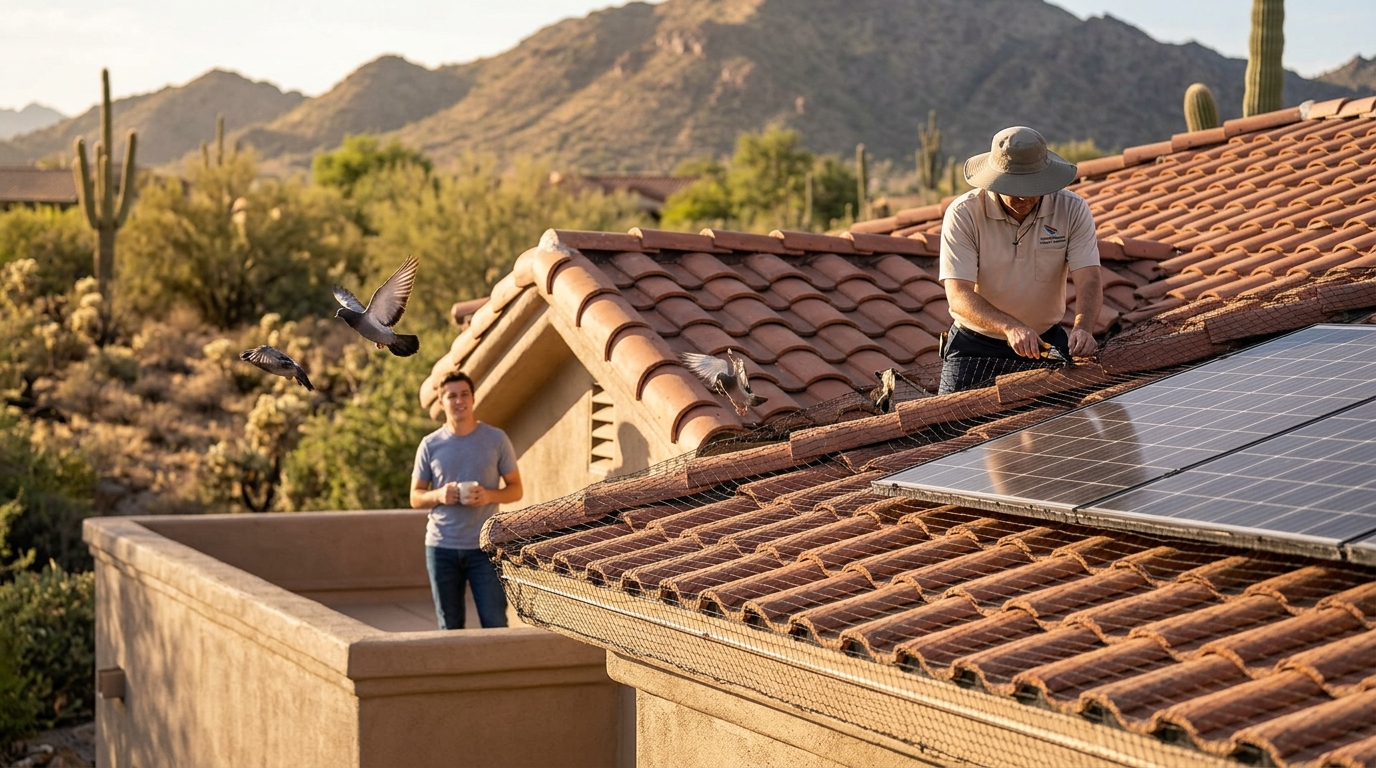
Getting rid of pigeons from your roof requires a multi-step approach combining physical barriers, habitat modification, and professional cleanup. You must first remove the birds humanely, then seal all entry points and install deterrents to prevent their return. This guide covers the most effective strategies for roof pigeon control, from DIY deterrents to professional exclusion services.
Bird Spikes
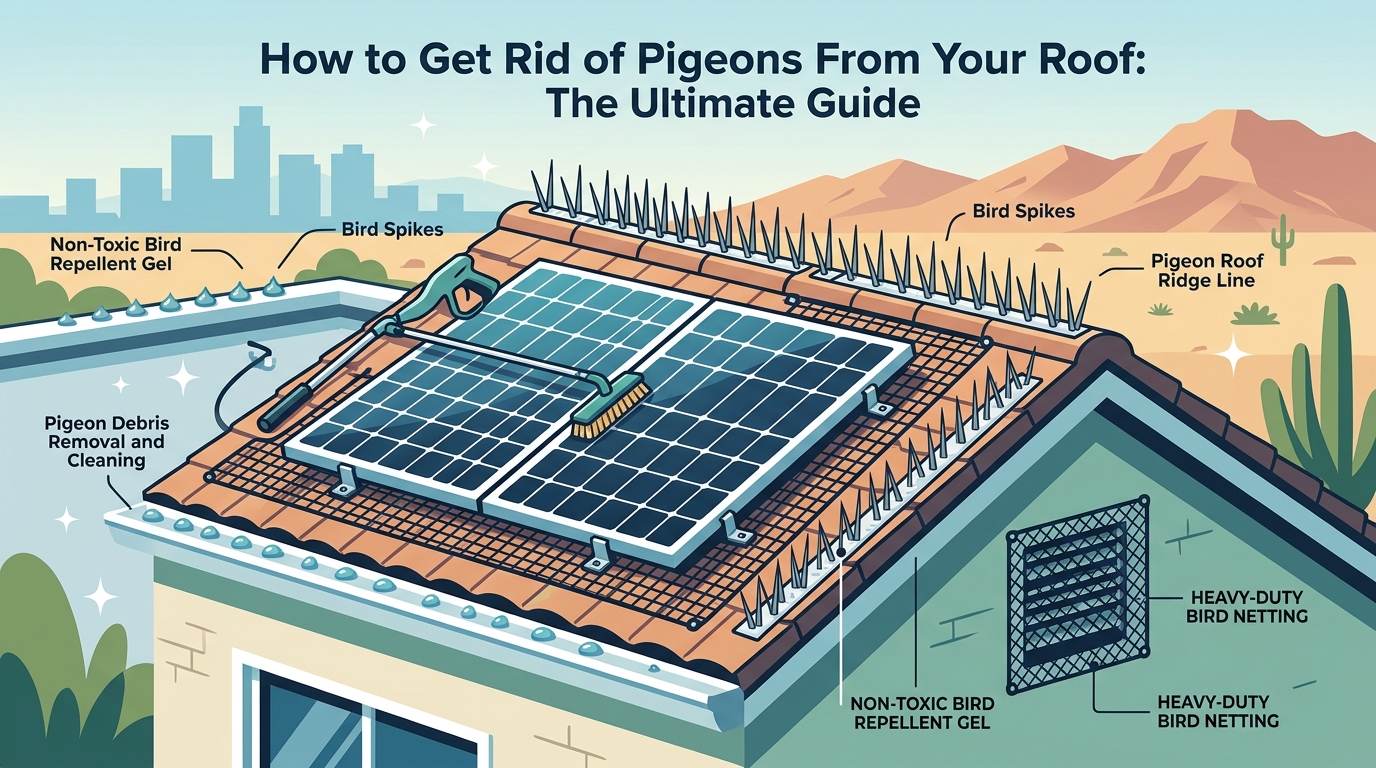
Bird spikes are physical deterrents installed on ledges, gutters, and roof edges to prevent pigeons from landing. These devices create an uneven surface that is uncomfortable for birds to perch on, effectively making your roof inaccessible. They are one of the most reliable long-term solutions for flat or low-slope roofs where pigeons commonly roost.
Installation Considerations
Proper installation is critical for effectiveness. Spikes must be securely fastened to withstand wind and weather. In the Greater Phoenix area, the intense sun can degrade lower-quality plastic spikes over time, so professional-grade materials are recommended. Professional Pigeon Control offers precision-engineered spikes that balance aesthetics with durability, ensuring your roof remains protected without compromising your home's appearance.
Bird Netting
Bird netting is a barrier system that covers open spaces on your roof or under eaves to physically block pigeon access. Unlike spikes, which deter landing, netting prevents birds from reaching specific nesting areas entirely. This method is particularly effective for complex rooflines, solar panel arrays, and areas with multiple entry points.
Choosing the Right Netting
The mesh size and material of the netting matter. The mesh must be small enough to prevent pigeons from squeezing through but large enough to allow airflow and prevent heat buildup. Professional installation ensures the netting is taut and secure, preventing sagging that could create new gaps. For properties with solar panels, specialized netting can be installed to protect the panels from nesting debris while maintaining energy efficiency.
Removing Attractants
Identifying Common Attractants
Common attractants include uncovered trash cans, pet food left outdoors, and standing water in gutters or planters. Even small amounts of food debris can sustain a pigeon population. Conduct a thorough audit of your property to identify and remove these sources. This step is often overlooked but is crucial for long-term success, as physical barriers alone may not work if the environment remains inviting.
Exclusion Methods
Exclusion methods are techniques used to seal off entry points and prevent pigeons from accessing your roof and attic spaces. This is the most critical component of a permanent pigeon control strategy. Exclusion involves identifying all potential entry points, such as gaps in the roofline, vents, and chimneys, and sealing them with durable materials.
Why Exclusion is Essential
Simply removing pigeons without excluding them will result in their return. Pigeons are highly persistent and will return to a familiar roosting site if it remains accessible. Expert pigeon exclusions involve a detailed assessment of your property to identify and seal every potential entry point, creating a comprehensive barrier that prevents re-infestation.
Predator Decoys
Predator decoys are visual deterrents designed to mimic the appearance of natural predators, such as hawks or owls, to scare pigeons away. These devices rely on the birds' instinctive fear of predators to discourage them from landing on your roof. While they can be effective in the short term, their long-term success is limited.
Limited Effectiveness
Pigeons are intelligent and can quickly habituate to static decoys. Once they realize the predator is not a real threat, they will ignore it. To maintain effectiveness, decoys must be moved regularly, which is often impractical for most homeowners. For this reason, predator decoys are best used as a temporary measure or in combination with other deterrents, rather than as a standalone solution.
Droppings Cleanup
Droppings cleanup is a critical health and safety step in pigeon control. Pigeon droppings can harbor harmful bacteria and fungi, including histoplasmosis and salmonella, which pose serious health risks to humans and pets. Accumulated droppings can also cause significant structural damage to roofing materials and gutters due to their acidic nature.
Safe Cleanup Procedures
Professional cleanup involves the safe removal of all nesting materials and droppings, followed by thorough sanitization. This process requires proper protective equipment and industry-approved disinfectants to eliminate pathogens. Professional Pigeon Control provides comprehensive cleanup services that restore your property to a safe and sanitary condition, ensuring that the health risks associated with pigeon infestations are fully addressed.
Professional Removal Services
Professional removal services offer a comprehensive approach to pigeon control that combines removal, cleanup, and prevention. Working with a specialized company ensures that the problem is addressed at its root, rather than providing a temporary fix. Professionals have the expertise, tools, and experience to handle infestations of any size, from small residential issues to large commercial properties.
Benefits of Professional Service
One of the primary benefits of hiring a professional is the guarantee of long-term results. Companies like Professional Pigeon Control bring over 15 years of industry expertise to every job, ensuring that your property is not only cleared of pigeons but also protected against future infestations. Their services include free in-person estimates, humane removal, and durable exclusion solutions, providing peace of mind for homeowners and business owners alike.
Humane Exclusion Methods
Humane exclusion methods focus on removing pigeons safely and ethically, without causing harm to the birds. This approach aligns with modern pest control standards that prioritize animal welfare while effectively solving the property owner's problem. Humane methods include the use of traps that allow for safe relocation and exclusion techniques that prevent return without injury.
Ethical Considerations
Humane exclusion is not only ethical but also practical. Stressed or injured birds are more likely to cause property damage or spread disease. By using humane methods, you ensure that the birds are removed in a way that minimizes stress and maximizes the likelihood of successful relocation. Professional trapping and removal services prioritize the well-being of the birds while ensuring your property is protected, providing a responsible and effective solution to your pigeon problem.
Removing Food Attractants
Removing food attractants is a specific subset of attractant removal that focuses on eliminating food sources that draw pigeons to your property. Pigeons are opportunistic feeders and will consume a wide variety of foods, including seeds, grains, and human food scraps. By securing all food sources, you reduce the incentive for pigeons to visit your roof.
Practical Steps
Practical steps include using lidded trash cans, storing pet food indoors, and cleaning up any spilled food promptly. If you have outdoor dining areas, ensure that tables are wiped down after use. For commercial properties, managing waste disposal and food service areas is crucial. These simple measures can significantly reduce pigeon activity and complement other control methods.
Visual Deterrents
Visual deterrents are devices that use reflective surfaces, patterns, or movement to discourage pigeons from landing on your roof. These include reflective tape, mirrors, and predator decoys. The goal is to create an environment that feels unsafe or unappealing to the birds. While visual deterrents can be effective, they are often less reliable than physical barriers.
Combining Deterrents
For best results, visual deterrents should be used in combination with other methods. A multi-pronged approach that includes physical barriers, exclusion, and visual deterrents provides the highest level of protection. Professional Pigeon Control offers a diverse range of deterrents, including visually intimidating options and sound deterrents, tailored to your specific property needs to maximize effectiveness.
Sealing Roof Openings
Sealing roof openings is the final and most critical step in preventing pigeon return. This involves identifying and sealing all gaps, cracks, and openings in your roof, eaves, and attic spaces. Pigeons can squeeze through surprisingly small openings, so a thorough inspection is necessary to find all potential entry points.
Materials and Techniques
Effective sealing materials include metal mesh, hardware cloth, and durable sealants. The choice of material depends on the specific opening and the surrounding structure. Professional installation ensures that the sealing is secure and long-lasting, withstanding the elements and preventing future access. This step is essential for creating a pigeon-free environment that remains protected over time.
Key Takeaways
- Physical barriers like bird spikes and netting are the most effective long-term deterrents for roof pigeons.
- Exclusion methods, which involve sealing all entry points, are essential to prevent pigeons from returning.
- Removing attractants, including food and water sources, makes your property less appealing to pigeons.
- Professional cleanup is necessary to address health risks and structural damage caused by pigeon droppings.
- Humane exclusion methods ensure that birds are removed safely and ethically.
- Visual deterrents like predator decoys have limited long-term effectiveness and should be used in combination with other methods.
- Working with a professional service provider ensures a comprehensive and lasting solution to your pigeon problem.
- A multi-pronged approach combining removal, exclusion, and deterrents provides the highest level of protection.
Frequently Asked Questions
How long does it take to get rid of pigeons from a roof?
The time required depends on the size of the infestation and the methods used. Professional removal can often be completed in a single visit, but the full process, including cleanup and exclusion, may take several days. Long-term prevention requires the installation of durable barriers, which can be completed during the same service visit.
Are bird spikes effective for all roof types?
Bird spikes are most effective on flat or low-slope roofs and ledges. For steeply pitched roofs, other methods like netting or exclusion may be more appropriate. A professional assessment can determine the best deterrent for your specific roof structure.
Can I remove pigeons myself?
While you can attempt to remove attractants and install simple deterrents, professional removal is recommended for infestations. Professionals have the expertise to safely remove birds, clean up droppings, and install effective exclusion systems, ensuring a long-term solution.
Are pigeon droppings dangerous?
Yes, pigeon droppings can harbor harmful bacteria and fungi that pose health risks to humans and pets. They can also cause structural damage to roofing materials. Professional cleanup is recommended to safely remove and sanitize affected areas.
How do I prevent pigeons from returning after removal?
Prevention requires a combination of exclusion and deterrents. Sealing all entry points and installing physical barriers like spikes or netting is the most effective way to keep pigeons from returning. Removing attractants also plays a crucial role in long-term prevention.
What is the most humane way to remove pigeons?
The most humane method is professional trapping and relocation. This approach allows for the safe removal of birds without causing harm. Following removal, exclusion methods are used to prevent their return, ensuring a ethical and effective solution.