
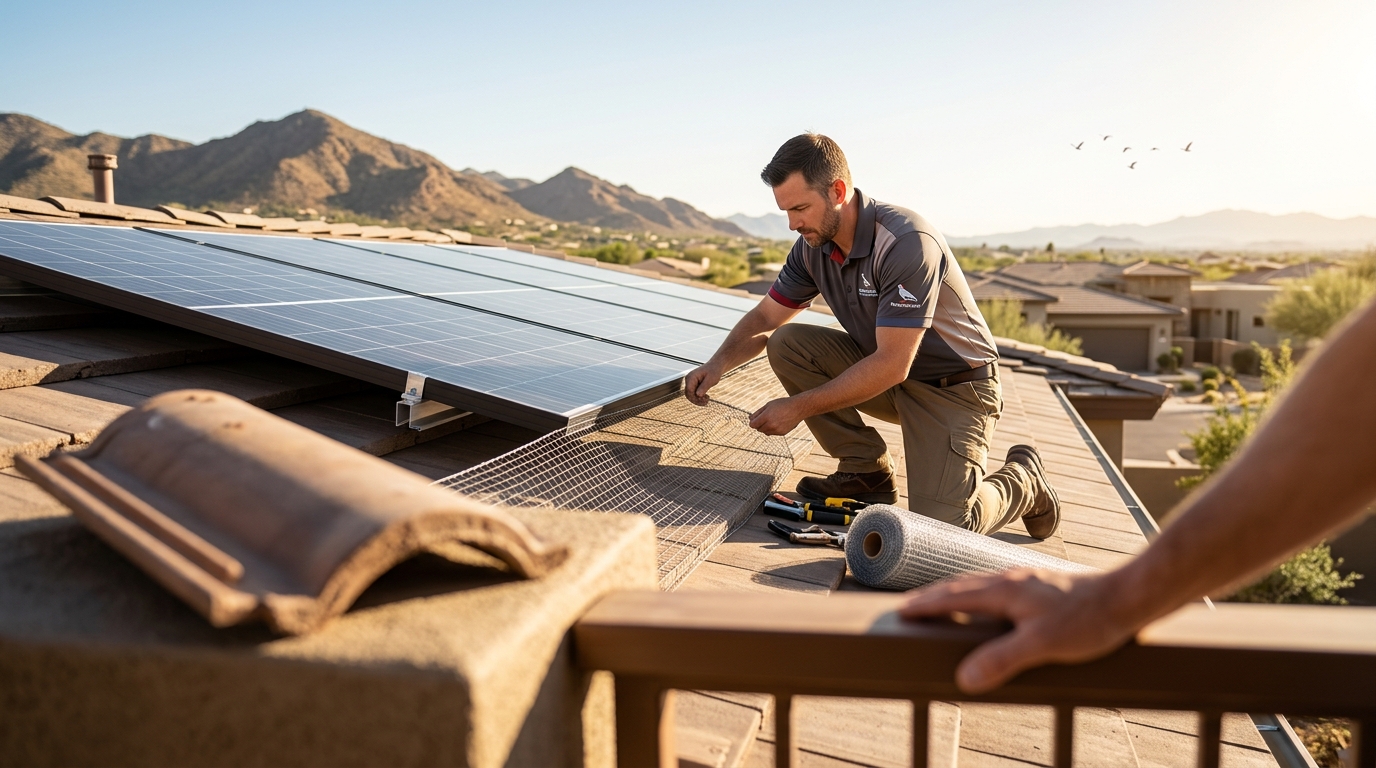
Getting rid of pigeons from your roof requires a multi-step approach combining physical barriers, habitat modification, and professional removal. You must first remove existing birds humanely, then seal all entry points and install deterrents to prevent their return. This guide covers the most effective strategies, from bird spikes and netting to exclusion methods and professional cleanup, ensuring your property remains safe and bird-free.
Bird Spikes
Bird spikes are a physical deterrent system designed to prevent pigeons from landing on flat surfaces. These devices consist of rows of vertical prongs that make perching uncomfortable or impossible for birds. They are highly effective for narrow ledges, window sills, and roof edges where pigeons typically roost. Because they do not harm the birds, they are a humane and long-lasting solution for preventing roosting.
Installation Best Practices
Proper installation is critical for the effectiveness of bird spikes. The spikes must be securely attached to the surface to withstand wind and weather conditions. Gaps between spike rows should be minimized to prevent birds from squeezing through. For roof edges, spikes should be installed along the entire perimeter to create a continuous barrier. This ensures that pigeons cannot find a safe spot to land and rest.
Limitations of Spikes
While effective for roosting, bird spikes do not prevent pigeons from flying over the area. They are best used in combination with other deterrents or exclusion methods. If pigeons are nesting in attics or under eaves, spikes alone will not solve the problem. They are most useful for preventing new birds from establishing a roosting site on exposed surfaces.
Bird Netting
Bird netting is a flexible barrier that blocks access to open spaces where pigeons nest or roost. It is particularly effective for covering large areas such as eaves, soffits, and the space under solar panels. The netting is made from durable, UV-resistant materials that can withstand the harsh Arizona sun. It is nearly invisible from a distance, preserving the aesthetic appeal of your property while providing robust protection.
Types of Netting
There are several types of bird netting available, each suited for different applications. Knotted netting is strong and durable, making it ideal for large commercial properties. Knotless netting is more flexible and easier to install, often used for residential eaves and soffits. The choice of netting depends on the size of the area to be covered and the specific behavior of the pigeons. Professional installers can recommend the best type for your specific situation.
Installation Considerations
Installing bird netting requires careful planning to ensure it is secure and effective. The netting must be tensioned properly to prevent sagging, which could allow birds to push through. It should be anchored firmly to the structure to withstand wind loads. Professional installation is recommended to ensure the netting is installed correctly and safely. This prevents potential damage to your property and ensures long-term effectiveness.
Removing Attractants
Food Source Management
Securing trash cans with tight-fitting lids is essential to prevent pigeons from accessing food waste. Pet food should be stored indoors and only placed outside for short periods. Bird feeders should be removed or replaced with designs that are inaccessible to pigeons. Regularly cleaning up fallen seeds and food debris also helps reduce the attractiveness of your property. These simple steps can significantly reduce pigeon activity.
Water Source Elimination
Fixing roof leaks and ensuring proper drainage prevents the accumulation of standing water. Clogged gutters and downspouts should be cleaned regularly to prevent water pooling. Any containers that can hold water, such as plant saucers or old tires, should be removed or emptied. By eliminating water sources, you make your property less appealing to pigeons and other birds.
Exclusion Methods
Exclusion methods involve physically blocking the entry points that pigeons use to access your roof and attic. This is the most effective way to prevent pigeons from nesting and roosting in your home. Common entry points include gaps in the roofline, vents, chimneys, and eaves. Sealing these openings with durable materials such as metal flashing, mesh, or foam sealant creates a permanent barrier. This method is essential for long-term pigeon control.
Identifying Entry Points
Conducting a thorough inspection of your roof and attic is the first step in identifying entry points. Look for signs of pigeon activity such as droppings, feathers, and nesting materials. Pay close attention to areas where the roof meets the walls, as these are common entry points. Professional inspectors can identify hidden gaps that may not be visible from the outside. This ensures that all potential entry points are sealed.
Sealing Techniques
Various materials can be used to seal entry points, depending on the size and location of the gap. Metal flashing is ideal for larger gaps and provides a durable, long-lasting barrier. Mesh screens are effective for covering vents and chimneys while allowing for airflow. Foam sealant can be used for smaller gaps and cracks. The choice of material depends on the specific application and the desired level of protection. Professional installation ensures that the sealing is done correctly and effectively.
Predator Decoys
Predator decoys are visual deterrents that mimic the appearance of natural predators such as hawks or owls. These decoys are designed to scare pigeons away from your property by creating a sense of danger. They are a low-cost and easy-to-install solution that can be effective in the short term. However, pigeons can become habituated to static decoys over time, reducing their effectiveness. Moving the decoys regularly can help maintain their deterrent effect.
Types of Decoys
There are various types of predator decoys available, including realistic plastic models and inflatable versions. Some decoys are equipped with motion sensors that activate sounds or movements to enhance their effectiveness. The choice of decoy depends on the size of your property and the behavior of the pigeons. Combining decoys with other deterrents such as spikes or netting can improve overall effectiveness.
Limitations of Decoys
Predator decoys are not a standalone solution for pigeon control. They are best used as a supplementary measure in combination with other methods. Pigeons are intelligent and can quickly learn that a static decoy poses no real threat. Regularly changing the position of the decoys or using multiple decoys can help maintain their effectiveness. However, for long-term control, physical barriers and exclusion methods are more reliable.
Droppings Cleanup
Pigeon droppings can pose significant health risks and cause structural damage to your property. They contain bacteria and fungi that can cause diseases such as histoplasmosis and cryptococcosis. The acidic nature of droppings can also corrode metal surfaces and damage wood. Professional cleanup is essential to safely remove droppings and sanitize the affected areas. This prevents the spread of disease and protects your property from further damage.
Health Risks
Exposure to pigeon droppings can lead to respiratory infections and other health issues. The dust from dried droppings can become airborne and inhaled, posing a risk to humans and pets. It is important to wear protective gear such as masks and gloves when handling droppings. Professional cleanup crews use specialized equipment and disinfectants to safely remove and sanitize the area. This ensures that the health risks are minimized.
Structural Damage
The weight of accumulated droppings can put stress on roof structures, potentially leading to leaks or collapse. The acidic nature of the droppings can also corrode metal flashing and gutters. Regular inspection and cleanup are essential to prevent this damage. Professional cleanup services include power washing and sanitization to restore the affected areas to a clean and safe condition. This helps extend the life of your roof and other structural components.
Professional Removal Services
Professional pigeon removal services offer a comprehensive solution to your pigeon problem. These services include humane trapping and removal of existing birds, thorough cleanup of droppings, and installation of deterrents and exclusion methods. Professional companies have the expertise and equipment to handle large infestations safely and effectively. They can also provide ongoing maintenance and monitoring to ensure that pigeons do not return. Working with a professional ensures that your property is protected in the long term.
Why Choose a Professional
Professional pigeon control companies, such as Professional Pigeon Control, bring years of experience and specialized knowledge to the table. They understand the behavior of pigeons and the most effective methods for deterring them. They also have the necessary safety equipment to handle droppings and prevent the spread of disease. Their services are tailored to your specific property and needs, ensuring a customized and effective solution.
Service Process
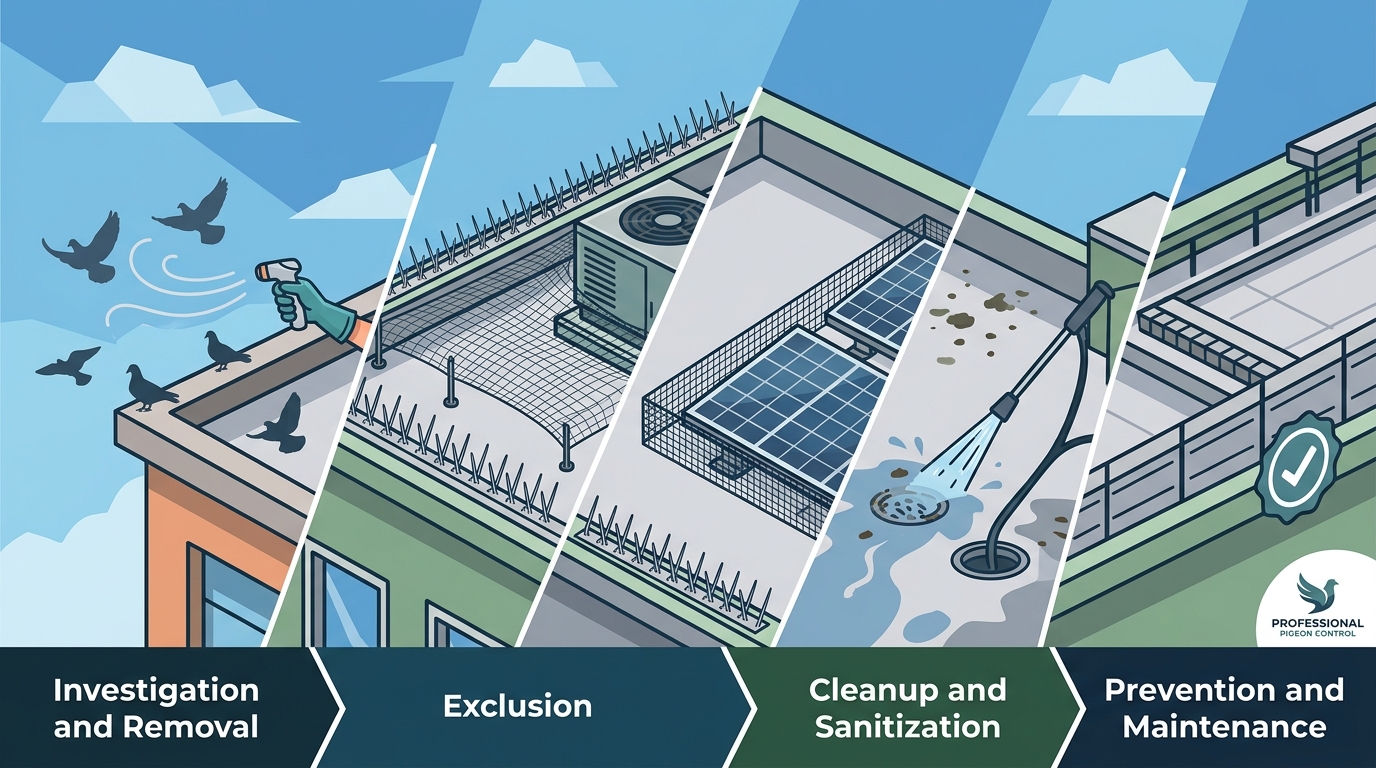
The professional removal process typically begins with a thorough inspection of your property. This helps identify the extent of the infestation and the best approach for removal and prevention. The birds are then trapped and removed humanely. The affected areas are cleaned and sanitized, and deterrents and exclusion methods are installed. Finally, the property is monitored to ensure that pigeons do not return. This comprehensive approach provides long-term peace of mind.
Key Takeaways
- Bird spikes are effective for preventing roosting on flat surfaces but do not prevent nesting.
- Bird netting is a durable barrier that blocks access to open spaces such as eaves and soffits.
- Removing food and water sources makes your property less attractive to pigeons.
- Exclusion methods involve sealing entry points to prevent pigeons from accessing your attic.
- Predator decoys can be effective in the short term but may lose effectiveness over time.
- Pigeon droppings pose health risks and can cause structural damage, requiring professional cleanup.
- Professional removal services offer a comprehensive solution including trapping, cleanup, and prevention.
- A multi-step approach combining physical barriers, habitat modification, and professional services is most effective.
Frequently Asked Questions
How long does it take to remove pigeons from a roof?
The time required depends on the size of the infestation and the methods used. Professional removal can often be completed in a single day, but prevention measures may take longer to install. DIY methods may take several weeks to show results.
Are bird spikes harmful to pigeons?
No, bird spikes are designed to be humane. They prevent birds from landing but do not cause injury or harm. They are a safe and effective deterrent.
Can I install bird netting myself?
While it is possible to install bird netting yourself, professional installation is recommended. Professionals ensure that the netting is installed correctly and securely, preventing potential damage to your property.
How often should I clean pigeon droppings?
Regular inspection and cleanup are recommended, especially if you have an active pigeon problem. Professional cleanup should be performed whenever significant accumulation is observed to prevent health risks and structural damage.
Do predator decoys work long-term?
Predator decoys can be effective in the short term, but pigeons may become habituated to them over time. Moving the decoys regularly or combining them with other deterrents can help maintain their effectiveness.
What is the most effective way to prevent pigeons from returning?
The most effective way is to combine exclusion methods, such as sealing entry points, with deterrents such as bird spikes or netting. This creates a multi-layered defense that prevents pigeons from accessing your property.
How much does professional pigeon removal cost?
The cost varies depending on the size of the infestation and the extent of the damage. Professional companies typically provide a free estimate after inspecting your property. It is important to get multiple quotes to compare prices and services.