
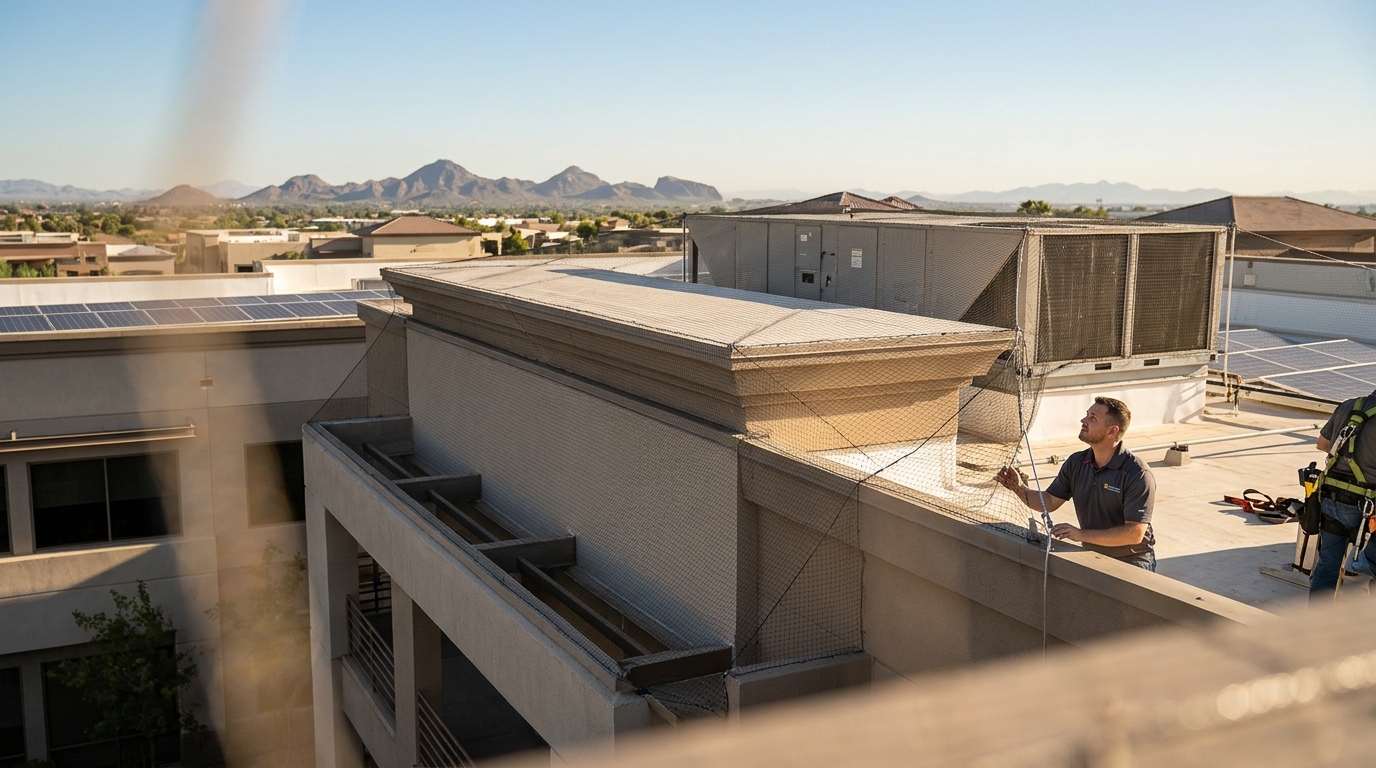
Bird netting is a physical barrier system that prevents pigeons from landing, roosting, or nesting on commercial buildings. It works by eliminating the flat or accessible surfaces birds need to perch, effectively making the structure uninhabitable. For commercial properties in the Greater Phoenix area, this method provides a durable, long-term solution to persistent pigeon infestations.
The Physical Mechanics of Bird Netting
Commercial bird netting is a high-tensile mesh material designed to withstand environmental stress while remaining flexible enough to conform to building architecture. The primary mechanism is simple: it removes the landing zone. Pigeons require a stable, flat surface to land and rest. By covering ledges, roof edges, and HVAC units with netting, the physical space required for perching is eliminated. This is not a deterrent that relies on fear or confusion; it is a structural exclusion that makes the area physically inaccessible to the birds.
Material Composition and Durability
Professional-grade netting is typically made from UV-stabilized polyethylene or nylon. These materials are engineered to resist the intense Arizona sun, which can degrade standard plastics quickly. The mesh size is critical, usually ranging from one to two inches, ensuring that even small birds cannot squeeze through while allowing air and water to pass freely. This permeability is essential for maintaining the building's ventilation and preventing water pooling on the roof.
Installation Strategies for Commercial Structures
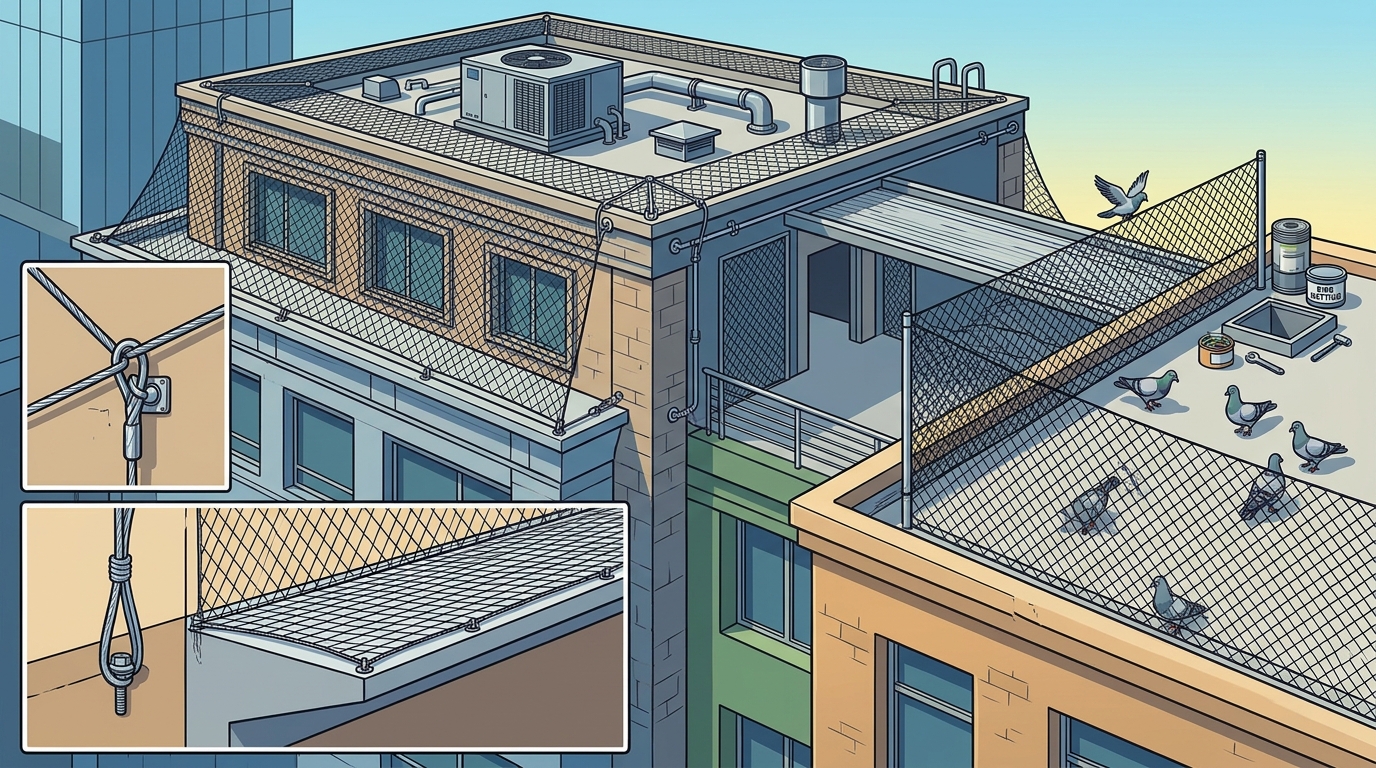
Effective installation requires a precise assessment of the building's architecture. Technicians identify all potential entry points and roosting areas, including roof parapets, skylights, and mechanical units. The netting is then anchored securely to the building's structure using specialized hardware. This ensures the mesh remains taut and secure against wind and weather. A properly installed system creates a continuous barrier that leaves no gaps for birds to exploit.
Addressing Complex Architectural Features
Commercial buildings often have complex features like solar panels and large HVAC systems. Netting can be installed over these structures to prevent pigeons from nesting underneath. This is particularly important for solar panels, where pigeon droppings can significantly reduce energy efficiency. By covering the space beneath the panels, the netting protects the investment and ensures optimal performance. This approach is a key part of comprehensive pigeon control strategies for modern commercial properties.
Why Netting Outperforms Temporary Deterrents
Many property managers turn to visual or auditory deterrents, such as reflective tape or predator decoys. While these may work temporarily, pigeons quickly habituate to them. Bird netting, however, provides a permanent solution. Once installed, it does not require constant adjustment or replacement. This makes it a more cost-effective option in the long run, especially for large commercial facilities where pigeon infestations can cause significant damage and health hazards.
Health and Safety Implications
Pigeon droppings are not just a cosmetic issue; they pose serious health risks. They can carry pathogens like histoplasmosis and cryptococcosis, which can affect human health. By preventing pigeons from accessing the building, netting eliminates the source of these contaminants. This is crucial for maintaining a safe environment for employees and customers. Professional installation ensures that the netting is secure and effective, providing peace of mind for property owners.
Long-Term Maintenance and Inspection
While bird netting is a durable solution, it is not entirely maintenance-free. Regular inspections are recommended to check for any signs of wear or damage. This includes looking for tears in the mesh or loose anchors. In the Greater Phoenix area, the extreme heat and occasional storms can stress the materials over time. Professional maintenance services can ensure that the netting remains in optimal condition, extending its lifespan and effectiveness. This proactive approach helps prevent new infestations from developing.
Integration with Other Control Methods
Netting is often used in conjunction with other pigeon control methods, such as exclusion and cleanup. A comprehensive approach ensures that all aspects of the pigeon problem are addressed. For example, after installing netting, a thorough cleanup of existing droppings and nesting materials is essential. This creates a clean, bird-free environment that discourages new pigeons from settling. Professional Pigeon Control offers integrated solutions that combine netting with other services for maximum effectiveness.
Key Takeaways
- Bird netting is a physical barrier that prevents pigeons from landing and nesting on commercial buildings.
- It is made from durable, UV-stabilized materials that withstand the harsh Arizona climate.
- Professional installation ensures the netting is secure and covers all potential roosting areas.
- Netting provides a long-term solution that outperforms temporary deterrents like decoys or tape.
- It helps protect health and safety by preventing the accumulation of pigeon droppings.
- Regular inspections and maintenance are recommended to ensure the netting remains effective.
- Combining netting with cleanup and exclusion services provides a comprehensive pigeon control strategy.
Frequently Asked Questions
Does bird netting damage solar panels?
No, when installed correctly, bird netting does not damage solar panels. It is designed to be lightweight and flexible, allowing it to be installed over or around panels without causing stress or breakage. In fact, it helps protect the panels from pigeon droppings and nesting materials.
How long does bird netting last?
High-quality bird netting can last for many years, often 10 to 15 years or more, depending on the material and environmental conditions. Regular inspections can help identify any wear and tear early, extending the lifespan of the system.
Can pigeons still get under the netting?
If the netting is installed correctly and covers all entry points, pigeons cannot get under it. The key is a thorough assessment of the building to ensure no gaps are left. Professional installation is crucial for ensuring a complete barrier.
Is bird netting a humane solution?
Yes, bird netting is considered a humane solution because it does not harm the birds. It simply prevents them from accessing the building, encouraging them to find other suitable locations for roosting and nesting.
How much does bird netting cost for a commercial building?
The cost of bird netting varies depending on the size of the building, the complexity of the installation, and the specific areas that need to be covered. A professional assessment is required to provide an accurate quote. Professional Pigeon Control offers free estimates to help you understand the investment.
Do I need a permit to install bird netting?
In most cases, no permit is required to install bird netting on a commercial building. However, local regulations may vary, so it is always a good idea to check with your local authorities. Professional installers are familiar with local codes and can guide you through the process.
Can bird netting be removed if needed?
Yes, bird netting can be removed if necessary. The installation process uses hardware that allows for easy removal without damaging the building. This makes it a flexible solution for property owners who may need to modify their building in the future.
Conclusion
Bird netting is a highly effective and durable solution for keeping pigeons off commercial buildings. By providing a physical barrier, it eliminates the need for temporary deterrents and offers long-term protection. For property owners in the Greater Phoenix area, investing in professional bird netting is a smart choice that ensures a clean, safe, and pigeon-free environment. Contact Professional Pigeon Control today for a free estimate and learn how our expert team can help you reclaim your property.