

The best way to keep pigeons from coming back is to combine physical exclusion barriers with habitat modification and thorough sanitation. Professional Pigeon Control in Peoria, AZ, uses this integrated approach to ensure long-term results. This guide covers ten essential strategies, from removing food sources to installing durable deterrents, helping you protect your property permanently.
Food Source Removal
Pigeons are opportunistic feeders that thrive in areas with easy access to food. Removing these resources is the first step in any effective pigeon control strategy. Without a reliable food supply, pigeons are less likely to establish a permanent roost on your property.
Securing Trash and Waste
Outdoor trash cans are a primary attractant for urban pigeons. Ensure all bins have tight-fitting lids and are stored in enclosed areas when possible. Regularly clean bins to remove residual odors that may attract birds.
Managing Pet Food
Leaving pet food outside, even for a short time, creates a beacon for pigeons. Always bring pet food indoors after feeding. If you have outdoor feeding stations, consider using covered bowls that prevent birds from accessing the food.
Physical Exclusion Barriers
Physical exclusion is the most reliable method for keeping pigeons away. These barriers physically prevent birds from landing, nesting, or entering specific areas of your property. Professional Pigeon Control specializes in installing these barriers to create a permanent defense.
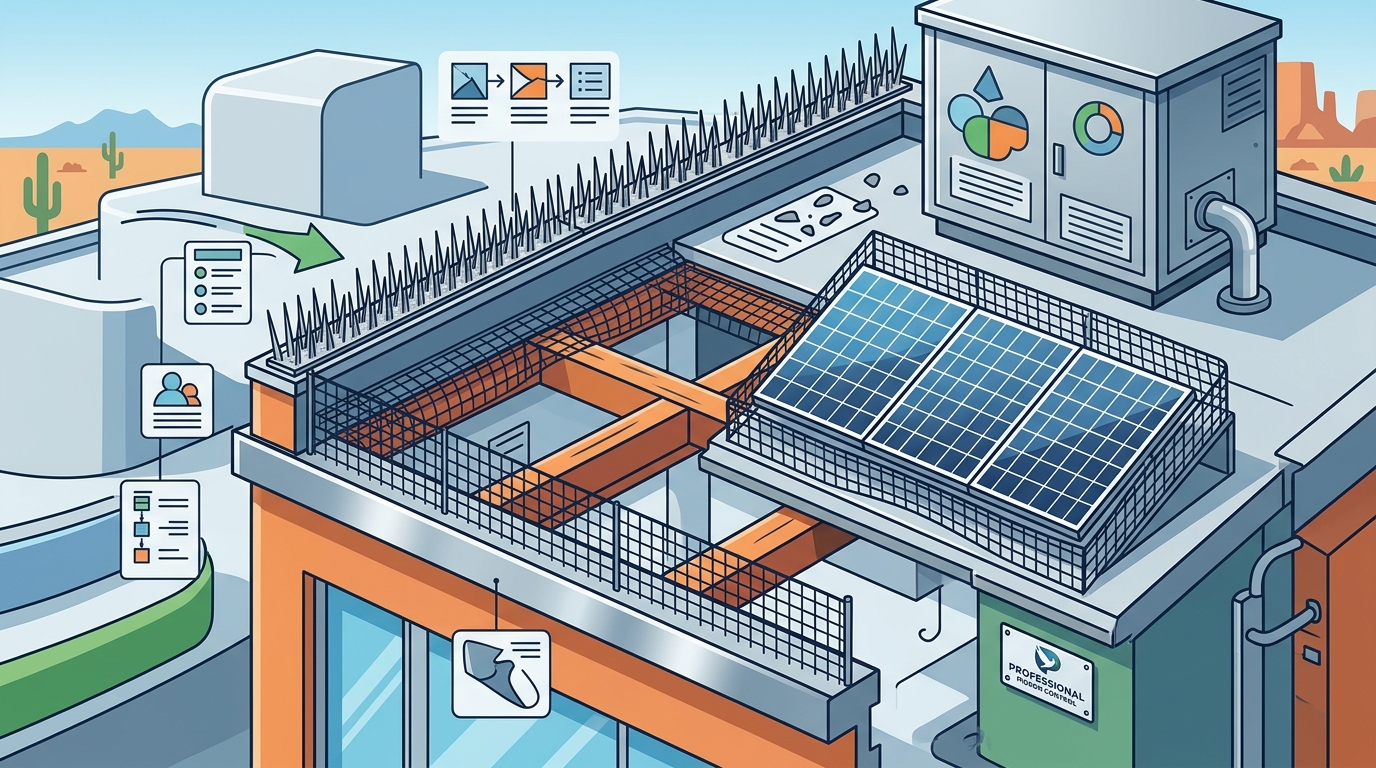
Netting Systems
Netting is an excellent solution for covering large open areas, such as under eaves or between buildings. It blocks access while maintaining airflow and visibility. High-quality netting is durable and weather-resistant, ensuring long-term protection.
Sealing Entry Points
Pigeons can squeeze through surprisingly small gaps. Inspect your property for openings in vents, chimneys, and rooflines. Sealing these points with mesh or other materials prevents pigeons from entering attics and other interior spaces.
Habitat Modification
Habitat modification involves altering the environment to make it less attractive to pigeons. This approach focuses on removing the features that pigeons find appealing, such as flat ledges and sheltered areas.
Removing Perches
Pigeons prefer flat, stable surfaces for perching. If possible, remove or modify ledges, pipes, and other structures that provide easy landing spots. This makes it difficult for pigeons to rest on your property.
Trimming Vegetation
Dense vegetation can provide cover and nesting sites for pigeons. Regularly trim trees and shrubs near your building to reduce hiding spots. This also improves visibility, making it easier to monitor for bird activity.
Pigeon Droppings Cleanup
Pigeon droppings are not just a cosmetic issue; they pose significant health risks. The droppings can harbor bacteria, fungi, and parasites that may cause illness in humans and pets. Professional cleanup is essential for safety and hygiene.
Health Risks of Droppings
Accumulated droppings can lead to the spread of diseases such as histoplasmosis and cryptococcosis. These conditions are caused by inhaling spores from dried droppings. Proper cleanup involves wearing protective gear and using appropriate disinfectants.
Professional Sanitation
Professional Pigeon Control offers comprehensive cleanup services that include removing droppings, sanitizing surfaces, and eliminating odors. Our team uses specialized equipment to ensure a thorough and safe cleanup.
Deterrent Devices
Deterrent devices are tools designed to discourage pigeons from landing or nesting on your property. These devices can be used in conjunction with exclusion barriers for added protection. They work by creating an uncomfortable or unappealing environment for the birds.
Visual Deterrents
Visual deterrents, such as reflective tape or predator decoys, can startle pigeons and discourage them from approaching. While effective in the short term, these devices may lose their impact over time as birds become accustomed to them.
Sonic Deterrents
Sonic deterrents emit sounds that are unpleasant to pigeons but inaudible to humans. These devices can be useful in open areas where physical barriers are not feasible. However, they should be used as part of a broader control strategy.
Exclusion Installation
Proper installation is critical for the effectiveness of exclusion barriers. Incorrect installation can leave gaps that pigeons can exploit, rendering the barriers useless. Professional installation ensures that all barriers are secure and durable.
Importance of Professional Installation
Professional Pigeon Control has over 15 years of experience in pigeon control. Our technicians are trained to install exclusion barriers correctly, ensuring long-term protection. We assess your property to determine the best placement for barriers and install them with precision.
Warranty and Maintenance
We stand behind our work with a five-year warranty on qualifying exclusion services. This warranty gives you peace of mind, knowing that your investment is protected. Regular maintenance checks can help ensure that your barriers remain effective over time.
Food Source Elimination
Eliminating food sources is a proactive approach to pigeon control. By removing all potential food sources, you make your property less attractive to pigeons. This strategy is particularly effective in urban areas where food waste is abundant.
Compost Management
Compost bins can attract pigeons if not managed properly. Ensure that compost bins are enclosed and that food scraps are covered. Avoid composting meat or dairy products, which are strong attractants for birds.
Community Awareness
Encourage neighbors to adopt similar practices. Pigeons can travel long distances in search of food, so a community-wide approach is more effective than individual efforts. Educating the community about the importance of food source elimination can help reduce pigeon populations in the area.
Nesting Site Removal
Removing existing nesting sites is crucial for preventing pigeons from returning. Pigeons are loyal to their nesting sites and will return to the same location year after year. By removing these sites, you disrupt their breeding cycle.
Safe Nest Removal
Removing nests should be done carefully to avoid disturbing active eggs or chicks. In many areas, it is illegal to disturb active nests of protected species. Professional Pigeon Control ensures that nest removal is done in compliance with local regulations.
Preventing Re-nesting
After removing a nest, it is important to make the area unappealing for future nesting. This can be done by installing deterrents or modifying the habitat. Combining nest removal with habitat modification provides the best chance of long-term success.
Physical Deterrents
Physical deterrents are tangible devices that prevent pigeons from landing on specific surfaces. These devices are often the most effective deterrents because they create a physical barrier that birds cannot overcome.
Bird Spikes
Bird spikes are rows of sharp, pointed devices installed on ledges and other flat surfaces. They make it uncomfortable for pigeons to land, discouraging them from using the area. Spikes are a popular choice for commercial buildings and rooftops.
Wire Systems
Wire systems are thin cables installed across ledges or other surfaces. They create a barrier that prevents pigeons from landing. Wire systems are less obtrusive than spikes and can be a good option for areas where aesthetics are a concern.
Property Sanitation
Regular property sanitation is essential for maintaining a pigeon-free environment. Cleanliness deters pigeons and reduces the risk of health issues associated with bird droppings. A consistent sanitation schedule is a key component of any pigeon control plan.
Regular Cleaning Schedule
Establish a regular cleaning schedule for areas where pigeons are likely to roost. This includes cleaning ledges, gutters, and other surfaces where droppings may accumulate. Regular cleaning prevents the buildup of droppings and keeps your property looking its best.
Long-Term Maintenance
Long-term maintenance involves periodic inspections and touch-ups to ensure that your pigeon control measures remain effective. Professional Pigeon Control offers maintenance plans that include regular inspections and cleaning. This proactive approach helps prevent new infestations and keeps your property protected.
Key Takeaways
- Remove food sources by securing trash and managing pet food.
- Install physical exclusion barriers like netting and sealed entry points.
- Modify the habitat by removing perches and trimming vegetation.
- Perform professional cleanup of pigeon droppings to eliminate health risks.
- Use deterrent devices such as visual and sonic deterrents.
- Ensure proper installation of exclusion barriers for long-term effectiveness.
- Eliminate all potential food sources, including compost and community waste.
- Remove nesting sites and prevent re-nesting through habitat modification.
Frequently Asked Questions
How long does it take to keep pigeons from coming back?
It typically takes a few weeks to a few months to see a significant reduction in pigeon activity. The timeline depends on the size of the population and the effectiveness of your control measures. Consistency is key to long-term success.
Are pigeon deterrents safe for other birds?
Most physical deterrents, such as spikes and netting, are safe for other birds. They are designed to deter pigeons without causing harm. However, it is important to choose deterrents that are appropriate for your specific situation.
Can I install exclusion barriers myself?
While some simple barriers can be installed by homeowners, professional installation is recommended for complex systems. Professional Pigeon Control ensures that barriers are installed correctly and securely, providing the best protection.
How often should I clean pigeon droppings?
It is best to clean droppings as soon as they are noticed. Regular cleaning prevents the buildup of droppings and reduces health risks. A professional cleanup may be necessary for large accumulations.
Do pigeons return to the same nesting site?
Yes, pigeons are loyal to their nesting sites and will often return to the same location year after year. Removing the nesting site and making the area unappealing is essential for preventing their return.
Is it legal to remove pigeon nests?
Laws regarding nest removal vary by location. In many areas, it is illegal to disturb active nests of protected species. Professional Pigeon Control ensures that nest removal is done in compliance with local regulations.
What is the most effective pigeon deterrent?
Physical exclusion barriers are generally the most effective deterrents. They create a physical barrier that pigeons cannot overcome. Combining exclusion barriers with habitat modification and sanitation provides the best results.
How much does professional pigeon control cost?
The cost of professional pigeon control varies depending on the size of the property and the extent of the infestation. Professional Pigeon Control offers free estimates to help you understand the cost of your specific situation.