
The best way to keep pigeons from coming back is to combine physical exclusion barriers with habitat modification and thorough cleanup. Professional Pigeon Control in Peoria, AZ, uses this multi-layered approach to ensure long-term results. This guide covers the five essential steps to reclaim your property permanently.
Food Source Removal
Pigeons are opportunistic feeders that thrive in urban environments. Food source removal is the first critical step in any pigeon control strategy. If you provide food, you provide a reason for them to stay. Homeowners and business owners in the Greater Phoenix area often unknowingly attract pigeons through pet food, bird feeders, and unsecured trash.
Securing Outdoor Feeding Areas
Remove all outdoor pet food bowls at night. If you feed wild birds, consider switching to feeders that are inaccessible to pigeons, such as tube feeders with small perches. Pigeons are large and cannot easily access these specific designs. This simple change can significantly reduce the number of pigeons visiting your property.
Managing Waste and Debris
Ensure all trash cans have tight-fitting lids. Pigeons can easily pry open loose lids to access food scraps. In commercial settings, dumpsters should be secured and cleaned regularly to remove odors that attract birds. By eliminating these food sources, you make your property less attractive to pigeons, which is a foundational element of the free estimates process we conduct to identify specific attractants.
Physical Exclusion Barriers
Physical exclusion is the most effective method for keeping pigeons away permanently. Exclusion is the process of sealing entry points and blocking access to nesting and roosting areas. Unlike temporary deterrents, exclusion physically prevents birds from entering a space. This is the core of our exclusions service, which ensures that once pigeons are removed, they cannot return.
Sealing Entry Points
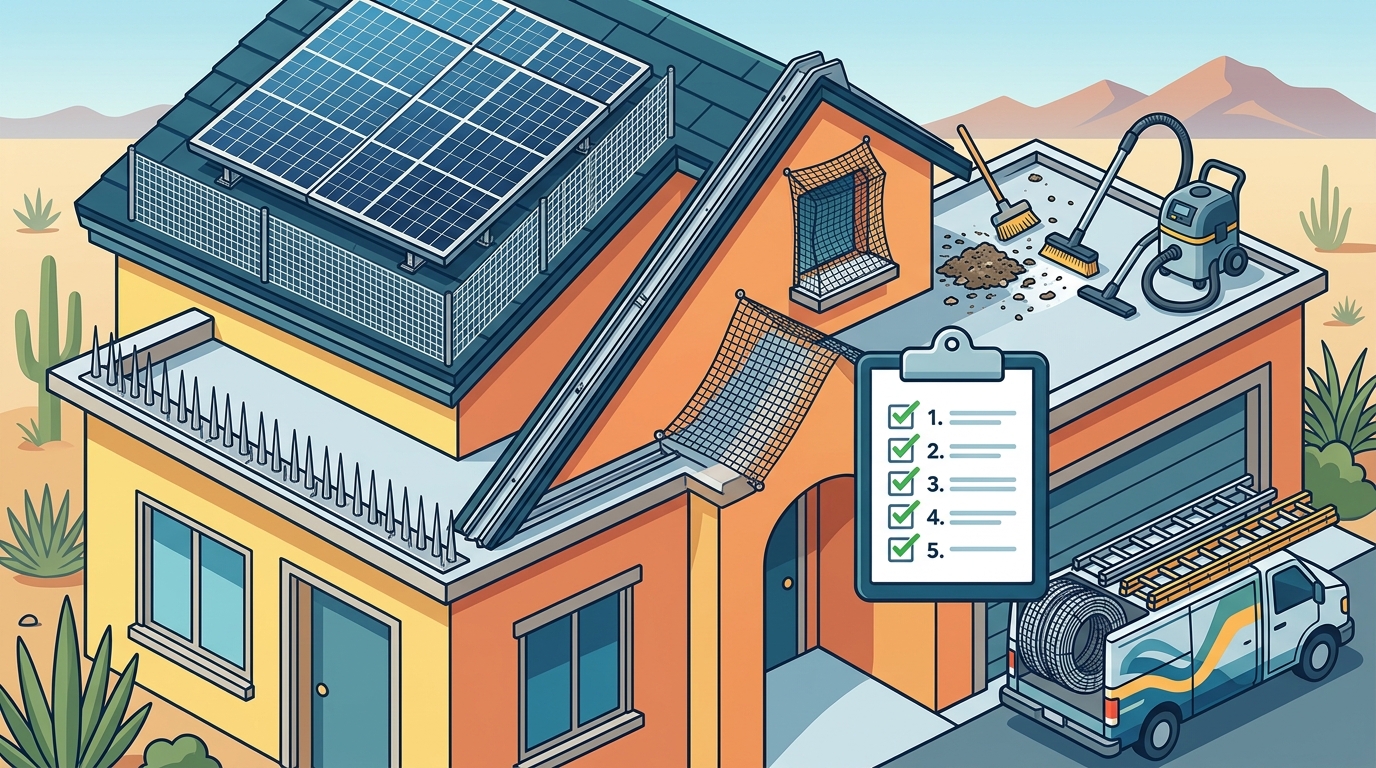
Pigeons can squeeze through gaps as small as two inches. Common entry points include vents, chimneys, and gaps under eaves. We use durable materials like steel mesh and hardware cloth to seal these openings. This prevents pigeons from entering attics, walls, and other enclosed spaces where they can cause significant damage.
Blocking Roosting Areas
Pigeons prefer flat, sheltered areas for roosting. Ledges, window sills, and solar panel gaps are prime targets. Installing physical barriers such as netting or spikes in these areas makes them unusable for pigeons. This is a critical step in our solar panel cleaning and proofing services, where we address the specific gaps under panels that attract birds.
Habitat Modification
Habitat modification involves altering the physical environment to make it less suitable for pigeons. This is a proactive approach that complements exclusion and food source removal. By changing the landscape, you reduce the appeal of your property to birds. This is a key component of our comprehensive services offering, which focuses on long-term prevention rather than just removal.
Landscaping Adjustments
Trim trees and shrubs that are close to your building. Pigeons use branches as stepping stones to reach ledges and roofs. Keeping vegetation at least ten feet away from your structure makes it harder for them to access your property. This simple landscaping change can have a significant impact on pigeon activity.
Surface Alterations
Smooth out rough surfaces that provide good grip for pigeons. If possible, install smooth metal or plastic covers on ledges. Pigeons struggle to maintain their footing on smooth surfaces, making them less likely to roost there. This is a subtle but effective way to modify your habitat and reduce pigeon presence.
Pigeon Droppings Cleanup
Pigeon droppings are not just a nuisance; they are a health hazard. Pigeon droppings cleanup is a critical step in the pigeon control process. Droppings can carry diseases such as histoplasmosis and cryptococcosis, which can be transmitted to humans through inhalation of spores. They also contain uric acid, which can corrode metal and concrete surfaces, leading to costly repairs.
Health and Safety Risks
Before any cleanup, it is essential to wear appropriate personal protective equipment, including N95 masks, gloves, and goggles. This prevents the inhalation of harmful spores and bacteria. Our team is trained in safe cleanup practices, ensuring that your property is not only clean but also safe for you and your family. This is a core part of our cleanups service, where we handle the removal and sanitization of affected areas.
Restoring Property Integrity
After removing droppings, it is important to sanitize the area to eliminate any remaining pathogens. We use industry-approved disinfectants to ensure a thorough clean. This not only improves the appearance of your property but also protects its structural integrity. By addressing the damage caused by droppings, you prevent further deterioration and maintain the value of your investment.
Deterrent Devices
Deterrent devices are tools designed to discourage pigeons from roosting or nesting in specific areas. While they are not as effective as physical exclusion, they can be a useful addition to a comprehensive pigeon control plan. Deterrent devices work by creating an environment that is uncomfortable or unappealing to pigeons. This is a key part of our deterrents service, where we select the right devices for your specific property.
Visual and Auditory Deterrents
Visual deterrents, such as reflective tape and predator decoys, can startle pigeons and discourage them from landing. Auditory deterrents use sound to create an uncomfortable environment. However, pigeons can become habituated to these devices over time, so they are best used in combination with other methods. This is why we recommend a multi-layered approach to pigeon control.
Physical Deterrents
Physical deterrents, such as bird spikes and wire systems, are more effective than visual or auditory options. Spikes create a physical barrier that prevents pigeons from landing on ledges and other flat surfaces. Wire systems create a grid that makes it difficult for pigeons to perch. These devices are durable and long-lasting, providing a reliable solution to pigeon problems. This is a key component of our trapping and removal service, where we ensure that pigeons are not only removed but also prevented from returning.
Comparison of Pigeon Control Methods
| Method | Effectiveness | Longevity | Best For |
|---|---|---|---|
| Food Source Removal | High | Permanent | Reducing attractants |
| Physical Exclusion | Very High | Permanent | Preventing entry |
| Habitat Modification | Medium | Long-term | Reducing appeal |
| Droppings Cleanup | High | Temporary | Health and safety |
| Deterrent Devices | Medium | Short-term | Discouraging roosting |
Key Takeaways
- Food source removal is the first step in any pigeon control strategy.
- Physical exclusion is the most effective method for keeping pigeons away permanently.
- Habitat modification makes your property less attractive to pigeons.
- Pigeon droppings cleanup is essential for health and safety.
- Deterrent devices can be a useful addition to a comprehensive plan.
- A multi-layered approach is the most effective way to keep pigeons from coming back.
- Professional Pigeon Control in Peoria, AZ, offers a comprehensive solution for long-term results.
Frequently Asked Questions
How long does it take to keep pigeons from coming back?
With a comprehensive approach that includes exclusion, habitat modification, and cleanup, you can expect to see results within a few weeks. The key is to address all aspects of the problem, not just the immediate presence of pigeons.
Are pigeon deterrents effective on their own?
Deterrents are less effective on their own because pigeons can become habituated to them. They are best used in combination with physical exclusion and habitat modification for long-term results.
How often should I clean up pigeon droppings?
It is best to clean up pigeon droppings as soon as you notice them. Regular cleanup prevents the buildup of harmful pathogens and protects your property from damage.
Can I do pigeon control myself?
While you can take some steps, such as food source removal and habitat modification, professional exclusion and cleanup are best left to the experts. Pigeon control requires specialized knowledge and equipment to be done safely and effectively.
What is the most common entry point for pigeons?
The most common entry points for pigeons are vents, chimneys, and gaps under eaves. Sealing these openings is a critical step in preventing pigeons from entering your property.
How much does professional pigeon control cost?
The cost of professional pigeon control varies depending on the size of your property and the extent of the problem. We offer free estimates to help you understand the cost of our services.