
The best way to keep pigeons from returning is to combine physical exclusion barriers with habitat modification and thorough cleanup. Professional Pigeon Control in Peoria, AZ, uses this multi-layered approach to ensure long-term results. This guide covers food source removal, physical barriers, habitat changes, droppings cleanup, and deterrent devices to protect your property permanently.
Food Source Removal
Pigeons are opportunistic feeders that thrive in areas with easy access to food. Removing food sources is the first critical step in pigeon control. Pigeon foraging behavior is driven by the availability of seeds, grains, and human food scraps. If you leave pet food outside, you are inviting pigeons to your property. Store pet food indoors and clean up any spills immediately. Human food waste, such as bread or birdseed, should also be removed or stored in sealed containers.
Securing Trash and Compost
Trash cans with loose lids are a magnet for pigeons. Use cans with tight-fitting lids or bungee cords to keep them secure. Compost bins should also be sealed to prevent access. Pigeons can tear through thin plastic bags, so use heavy-duty bags and keep them inside the can until collection day. This simple habit change can significantly reduce pigeon activity around your home.
Managing Garden and Outdoor Areas
If you have a garden, be aware that certain plants can attract pigeons. Avoid planting crops that pigeons prefer, such as corn or sunflowers, near your home. If you must grow these plants, consider using netting to protect them. Additionally, remove any standing water that might attract other birds, as this can create a broader ecosystem that supports pigeon populations.
Physical Exclusion Barriers
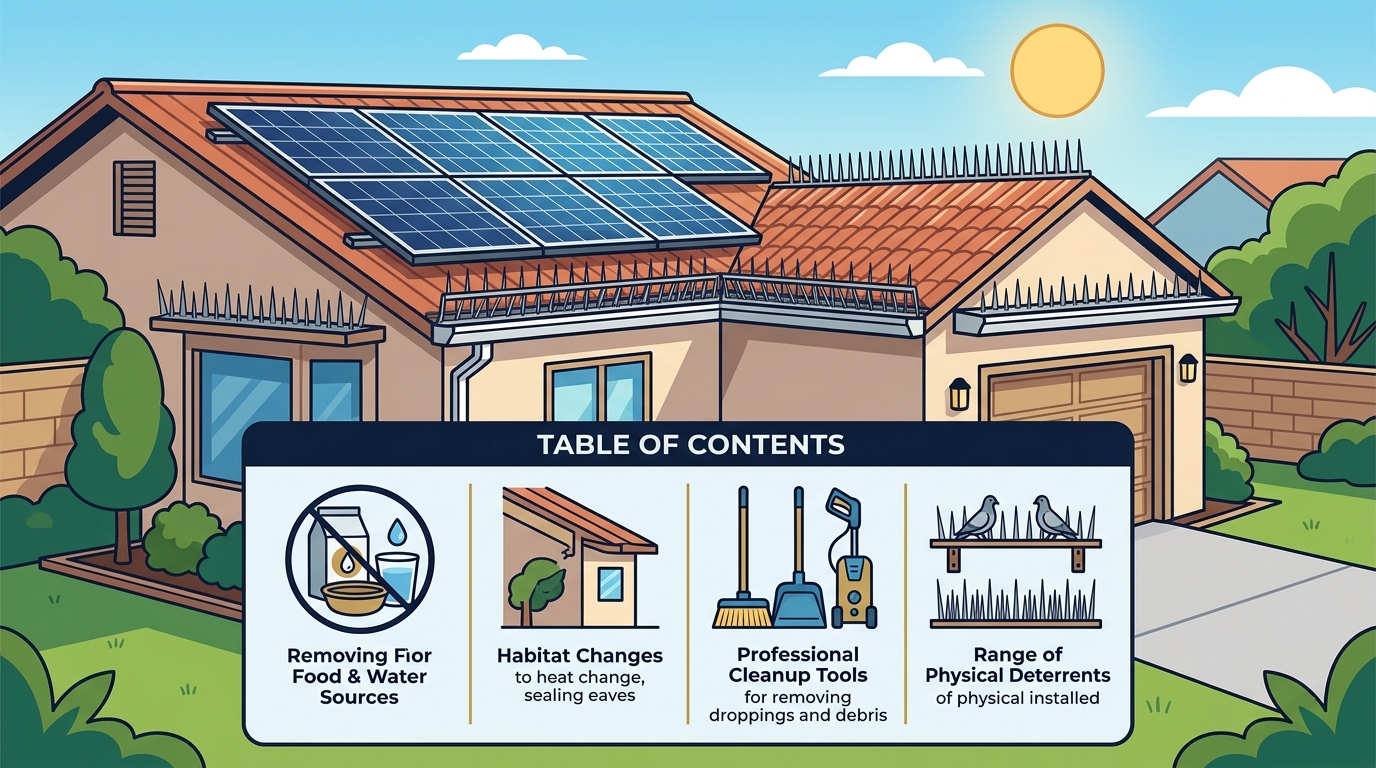
Physical exclusion is the most effective method for keeping pigeons out of specific areas. Pigeon exclusion is the process of physically blocking access to nesting and roosting sites. This method is permanent and does not rely on the pigeons' behavior changing. Professional Pigeon Control specializes in installing exclusion barriers that are both effective and aesthetically pleasing. Common exclusion methods include netting, spikes, and mesh.
Netting and Mesh Systems
Netting is ideal for covering large open areas, such as under eaves or between buildings. It creates a physical barrier that prevents pigeons from entering while allowing air and light to pass through. Mesh systems are similar but are often used for smaller, more targeted areas. Both methods are durable and can last for many years with proper installation. Professional installation ensures that the netting is secure and does not create gaps that pigeons can exploit.
Spikes and Wire Systems
Spikes are used to deter pigeons from landing on ledges, gutters, and other flat surfaces. They are not designed to harm the birds but to make the surface uncomfortable for them to perch on. Wire systems are another option, creating a barrier that prevents pigeons from landing. These methods are effective for smaller areas and can be installed quickly. They are a good complement to netting for comprehensive coverage.
Habitat Modification
Habitat modification involves changing the environment to make it less attractive to pigeons. This can include altering the structure of your property or managing the surrounding landscape. Pigeon habitat preference is influenced by the availability of shelter, food, and water. By modifying these factors, you can make your property less appealing to pigeons. This approach is often used in conjunction with exclusion barriers for maximum effectiveness.
Sealing Entry Points
Pigeons can enter buildings through small gaps and openings. Seal any cracks, holes, or gaps in your building's exterior. Pay special attention to areas around vents, chimneys, and windows. Use materials that are durable and resistant to pigeon beaks. Sealing entry points not only keeps pigeons out but also prevents other pests from entering. This is a critical step in any pigeon control plan.
Managing Vegetation and Shelter
Dense vegetation can provide shelter for pigeons. Trim back bushes and trees that are close to your building. Remove any debris or clutter that could serve as nesting sites. Keep your property clean and tidy to reduce the number of potential hiding spots for pigeons. This makes it easier to monitor your property and detect any new pigeon activity early.
Pigeon Droppings Cleanup
Pigeon droppings are not just a nuisance; they can pose serious health risks. Pigeon droppings cleanup is the process of safely removing and sanitizing areas affected by pigeon waste. Droppings can carry diseases such as histoplasmosis and cryptococcosis, which can be transmitted to humans through inhalation of spores. Professional cleanup is recommended for large infestations or areas where people spend significant time. Professional Pigeon Control offers thorough cleanup services that include removal of nesting materials and sanitization of affected surfaces.
Health Risks and Safety
Always wear protective gear when cleaning up pigeon droppings, including a mask, gloves, and goggles. Avoid sweeping or disturbing dry droppings, as this can release spores into the air. Use a damp cloth or vacuum with a HEPA filter to remove droppings. Disinfect the area with a suitable cleaner to kill any remaining pathogens. If you are unsure about how to safely clean up, it is best to hire a professional.
Restoring Property
Pigeon droppings can cause significant damage to property, including staining and corrosion of surfaces. After cleanup, assess the damage and make any necessary repairs. Power washing can be used to remove stains from hard surfaces, but be cautious with delicate materials. Restoring your property to its original condition is an important part of the cleanup process. It also helps to deter pigeons from returning, as they are less likely to nest in a clean and well-maintained area.
Deterrent Devices
Deterrent devices are tools designed to discourage pigeons from roosting or nesting in specific areas. Pigeon deterrents are a component of an integrated pest management strategy. They can be used in conjunction with exclusion barriers and habitat modification for a comprehensive approach. Common deterrent devices include visual, auditory, and electronic systems. These devices are non-lethal and focus on making the area unappealing to pigeons.
Visual and Auditory Deterrents
Visual deterrents, such as reflective tape or predator decoys, can startle pigeons and discourage them from landing. Auditory deterrents use sound to repel pigeons. However, pigeons can become habituated to these devices over time, reducing their effectiveness. They are best used as a temporary measure or in combination with other methods. Regularly changing the placement or type of deterrent can help maintain their effectiveness.
Electronic Deterrents
Key Takeaways
- Remove food sources by securing trash and storing pet food indoors.
- Install physical exclusion barriers such as netting and spikes to block access.
- Modify the habitat by sealing entry points and managing vegetation.
- Perform thorough cleanup of pigeon droppings to eliminate health risks.
- Use deterrent devices as a supplementary measure in an integrated strategy.
- Professional Pigeon Control offers comprehensive solutions for long-term results.
- Regular maintenance and monitoring are essential to prevent re-infestation.
- Combine multiple methods for the most effective pigeon control.
Frequently Asked Questions
How long does it take to keep pigeons from coming back?
With a comprehensive approach that includes exclusion, habitat modification, and cleanup, pigeons are typically deterred from returning within a few weeks. Long-term prevention requires ongoing maintenance and monitoring.
Are pigeon deterrents effective on their own?
Deterrents are most effective when used as part of an integrated strategy. On their own, they may provide only temporary relief as pigeons can become habituated to them.
Can I clean up pigeon droppings myself?
For small areas, you can clean up droppings yourself with proper protective gear. For large infestations or areas with high human traffic, professional cleanup is recommended to ensure safety and thoroughness.
What is the best physical barrier for pigeons?
The best barrier depends on the specific area. Netting is ideal for large open spaces, while spikes are better for ledges and gutters. Professional assessment can help determine the most suitable option for your property.
Do pigeons return after exclusion barriers are installed?
If exclusion barriers are installed correctly and maintained, pigeons are unlikely to return. Regular inspections can help identify any gaps or damage that need to be addressed.
How much does professional pigeon control cost?
Costs vary depending on the size of the infestation and the methods used. Professional Pigeon Control offers free estimates to provide an accurate quote for your specific needs.
Are there any legal restrictions on pigeon control?
While pigeons are not protected species, local regulations may apply to certain methods of control. It is best to consult with a professional to ensure compliance with local laws.
How often should I inspect my property for pigeons?
Regular inspections, at least quarterly, are recommended to detect any new pigeon activity early. This allows for prompt action before an infestation becomes established.