
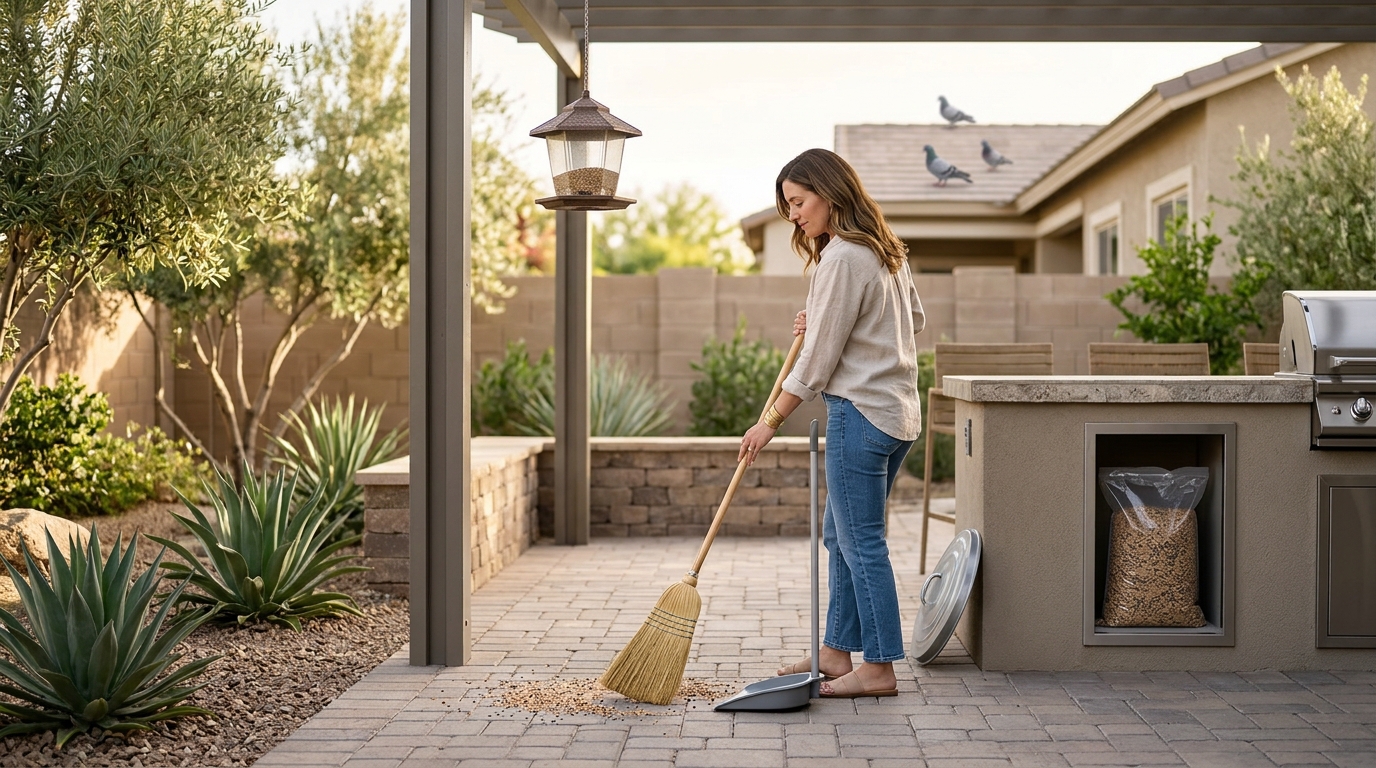
Pigeons return to your property primarily because they have established a reliable food source. Unlike other birds, pigeons are highly intelligent and possess strong spatial memory, allowing them to remember specific locations where they found food. To stop them from returning, you must eliminate all accessible food sources, including pet food, bird feeders, and human food waste. Professional Pigeon Control in Peoria, AZ, emphasizes that removing these attractants is the critical first step in any long-term pigeon management strategy.
The Biology of Pigeon Memory and Foraging
Pigeon foraging behavior is driven by survival instincts and cognitive mapping. A pigeon is a bird that uses visual landmarks to navigate back to successful feeding sites. When a pigeon finds a reliable source of calories, it marks the location in its memory. This biological trait means that simply scaring them away once is rarely effective. They will return to the exact same spot, often at the same time of day, expecting the food to still be there. Understanding this memory is key to breaking the cycle of infestation.
Identifying Hidden Food Attractants
Homeowners often overlook subtle food sources that attract pigeons. Common attractants include pet food left outside, bird feeders, and uncovered trash bins. Even small crumbs from outdoor dining or fallen fruit from trees can sustain a pigeon population. In the Greater Phoenix area, the warm climate allows these birds to forage year-round. Identifying these sources requires a thorough inspection of your property, including ledges, patios, and areas near garbage collection points. Professional Pigeon Control technicians conduct detailed site assessments to pinpoint these hidden attractants that casual observers might miss.
Strategies for Effective Food Source Removal
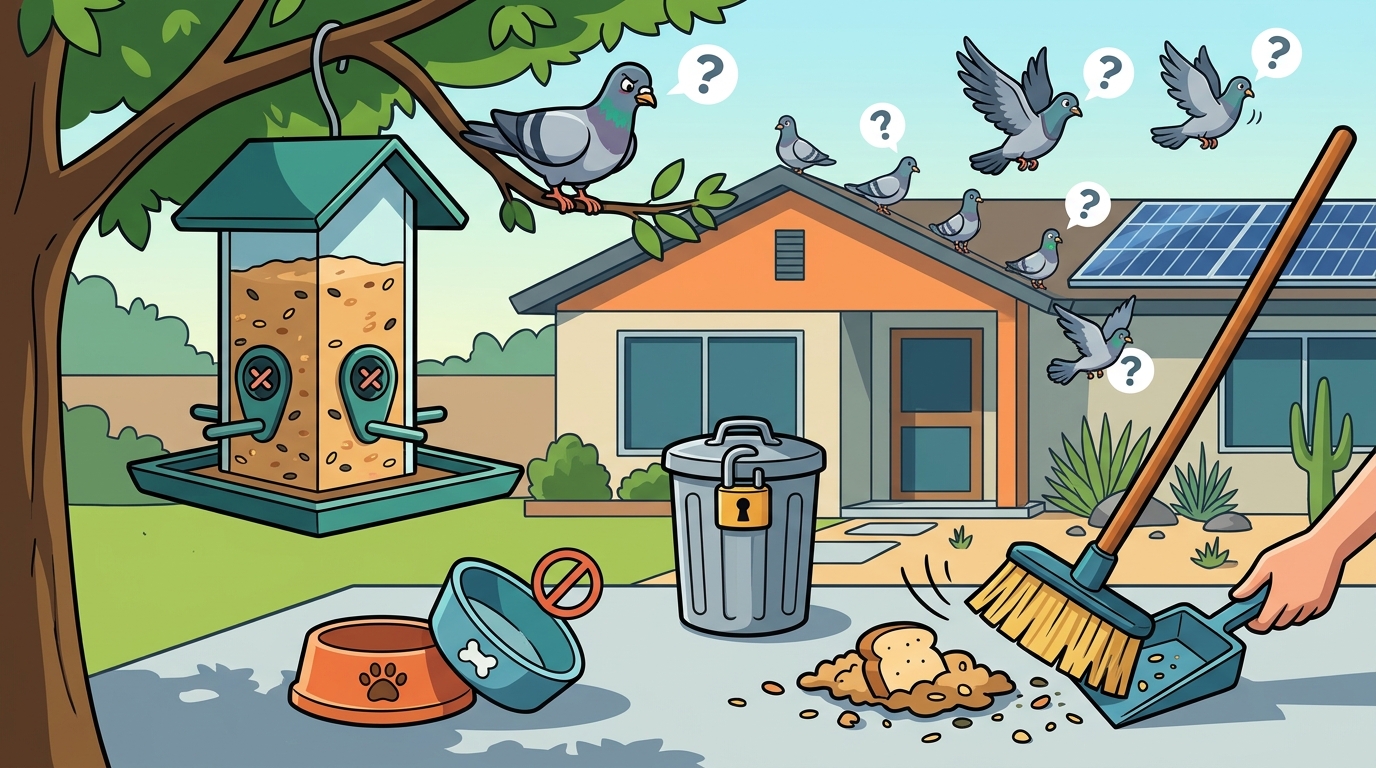
Eliminating food sources requires consistent and disciplined action. You must store pet food indoors and clean up any spilled kibble immediately. Bird feeders should be removed or replaced with designs that exclude pigeons. Trash cans need tight-fitting lids to prevent scavenging. Additionally, you should avoid leaving human food waste accessible. This discipline is crucial because pigeons are persistent. If they find even a small amount of food, they will continue to return. Consistency in removal is what eventually breaks their habit of visiting your property.
Combining Removal with Professional Exclusion
Food removal is necessary but often not sufficient on its own. Pigeons may return to roost even if food is scarce, especially if they have already established nests. This is where professional exclusion services become vital. Exclusion is the process of physically blocking entry points to prevent birds from accessing nesting areas. By combining food source removal with physical barriers, you create a comprehensive defense. Professional Pigeon Control offers pigeon exclusion services that seal vents, ledges, and other entry points. This dual approach ensures that even if a pigeon is hungry, it cannot access your property to nest or roost.
Long-Term Maintenance and Monitoring
Preventing pigeon return requires ongoing vigilance. After initial removal and exclusion, you must monitor your property for new attractants. Seasonal changes can introduce new food sources, such as fallen fruit or increased pet feeding. Regular inspections help identify these changes early. Professional Pigeon Control provides ongoing maintenance plans to ensure your property remains protected. By staying proactive, you prevent the re-establishment of pigeon colonies. This long-term perspective is essential for lasting peace of mind.
Key Takeaways
- Pigeons possess strong spatial memory and return to locations where they found food.
- Consistent removal of all food sources is critical to breaking the return cycle.
- Food removal should be combined with physical exclusion for best results.
- Professional assessment helps identify hidden attractants that homeowners miss.
- Ongoing monitoring is necessary to prevent new food sources from attracting pigeons.
Frequently Asked Questions
How long does it take for pigeons to stop returning after food removal?
It typically takes several weeks of consistent food removal for pigeons to stop returning. Their memory is strong, so they may continue to visit for a period before realizing the food is no longer available. Combining removal with exclusion accelerates this process.
Do bird feeders attract pigeons to my property?
Yes, bird feeders are a major attractant for pigeons. They provide an easy and reliable food source. If you want to attract other birds but not pigeons, consider using feeders with smaller perches or specific seed types that pigeons do not prefer.
Is it enough to just clean up food, or do I need barriers?
Cleaning up food is a necessary first step, but barriers are often needed for long-term protection. Pigeons may return to roost even without food. Physical exclusion prevents them from accessing nesting sites, providing a more complete solution.
Can I use natural deterrents to remove food sources?
Natural deterrents like predator decoys or reflective tape can help, but they do not remove food sources. They may discourage landing, but they do not address the root cause of attraction. Food removal remains the most effective primary strategy.
How does Professional Pigeon Control handle food source removal?
Professional Pigeon Control conducts a thorough assessment to identify all food attractants. They provide guidance on eliminating these sources and implement exclusion measures to prevent return. Their approach combines education with physical barriers for lasting results.
Conclusion
Stopping pigeons from returning requires a focused effort on food source removal. By understanding their memory and foraging habits, you can take the necessary steps to eliminate attractants. Professional Pigeon Control in Peoria, AZ, offers expert guidance and services to help you achieve a pigeon-free property. To start your journey toward lasting protection, for a free inspection.